Beagle vs Chesapeake Bay Retriever
Beagle vs Chessie
Which one fits your life? Start with the short answer, then check the details that matter most to you.


The short answer
The Beagle is smaller and needs less exercise; the Chessie is quieter and handles cold better.
Choose the Beagle if you want:
- A smaller dog that’s easy to carry and travel with
- A dog that’s happy with less exercise
- A better fit for a home with young kids
- Less brushing and grooming
Choose the Chessie if you want:
- A bigger, sturdier dog
- An active partner for long walks, runs and hikes
- A quieter dog (handy if you have close neighbors)
- A dog that copes better with cold winters
Beagle vs Chesapeake Bay Retriever at a glance
Highlighted rows are where they differ.
| Trait | Beagle | Chesapeake Bay Retriever |
|---|---|---|
| Weight | 18–30 lb (8–14 kg) | 55–80 lb (25–36 kg) |
| Height | 13–16 in (33–41 cm) | 21–26 in (53–66 cm) |
| Life span | 10–15 years | 10–13 years |
| Energy | Medium | High |
| Exercise needs | Medium | High |
| Trainability | Moderate | Moderate |
| Intelligence | Medium | High |
| With kids | Great | Good |
| With other pets | Great | Good |
| Shedding | Moderate | Moderate |
| Grooming | Low | Moderate |
| Barking | High | Low |
| In hot weather | Good | OK |
| In cold weather | Good | Great |
| Adaptability | High | Medium |
Beagle and Chesapeake Bay Retriever in real life
Studio photos make every dog look tidy. Here’s what each one looks like out in the world.

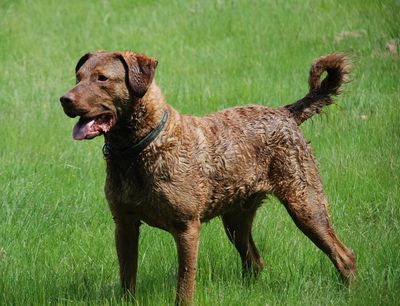
Which is bigger, the Beagle or the Chessie?
The Chessie, by far: it weighs about 3 times as much. A Chessie weighs 55–80 lb (25–36 kg) and stands 21–26 in (53–66 cm) at the shoulder. A Beagle weighs 18–30 lb (8–14 kg) and stands 13–16 in (33–41 cm).
Which needs more exercise, the Beagle or the Chessie?
The Chessie. The Chessie is high-energy and needs hard exercise every day. The Beagle is moderately active and needs a daily walk plus playtime. If your idea of exercise is a lap around the block, the Beagle is the better fit.
Which is better with kids, the Beagle or the Chessie?
The Beagle. The Beagle is great with kids; the Chessie is good with kids. With other pets, the Beagle gets along great; the Chessie usually gets along. Whichever you choose, supervise young children with any dog.
Which is easier to train, the Beagle or the Chessie?
They’re about the same. Both train well with patience and consistency. The Chessie is quick to learn; the Beagle learns at a steady pace.
Which sheds more, the Beagle or the Chessie?
About the same: both shed a moderate amount. The Chessie needs regular brushing; the Beagle needs little grooming.
Which barks more, the Beagle or the Chessie?
The Beagle. The Beagle barks a lot; the Chessie rarely barks. Live in an apartment or close to neighbors? The Chessie is the safer bet.
Which lives longer, the Beagle or the Chessie?
The Beagle, on average. The Beagle usually lives 10–15 years; the Chessie usually lives 10–13 years. Within any breed, good breeding, a healthy weight and regular vet care make a real difference.
Which handles hot and cold weather better, the Beagle or the Chessie?
The Beagle in the heat; the Chessie in the cold. The Beagle handles heat and cold well. The Chessie copes with moderate heat and handles cold very well.
Still deciding? Compare similar breeds
Full trait profiles
Every trait we rate, with notes on each breed.
Beagle
Beagles are energetic and playful, enjoying daily walks, games, and activities.
Beagles need regular exercise, including walks, playtime, and scent-related activities.
Beagles can be stubborn, but with patience and consistency, they respond well to positive training.
Beagles are intelligent dogs with a strong sense of smell and a love for problem-solving.
Beagles adapt well to various environments, from city apartments to country homes.
Beagles are friendly, gentle, and patient, making them excellent companions for children.
Social and good-natured, Beagles usually get along well with other dogs and pets.
Beagles can tolerate cold weather but should have access to warmth and shelter.
Beagles can handle hot climates, but need shade, water, and breaks during hot weather.
Beagles shed moderately, requiring regular brushing to control loose hair.
Beagles have low grooming needs, with regular brushing and occasional bathing.
Beagles tend to bark more frequently and may require consistent training to manage their barking.
Beagles may experience some health issues and require additional care and attention, such as regular veterinary checkups, preventative care, and potential medication or treatments.
Chesapeake Bay Retriever
Chesapeake Bay Retrievers are large dogs, weighing 55-80 lbs, with a height of 21-26 inches.
Chesapeake Bay Retrievers have a high energy level and require regular exercise and mental stimulation.
Chesapeake Bay Retrievers need a significant amount of exercise, including daily walks, runs, and opportunities to swim or retrieve.
Chesapeake Bay Retrievers are intelligent and trainable, but can be stubborn. Consistent, positive reinforcement is essential.
Chesapeake Bay Retrievers are highly intelligent dogs and excel in various dog sports and activities, especially those involving water.
Chesapeake Bay Retrievers can adapt to different living situations, but they need plenty of space and exercise to thrive.
Chesapeake Bay Retrievers are good with children when properly socialized and supervised.
Chesapeake Bay Retrievers can get along well with other pets, especially when raised together.
Chesapeake Bay Retrievers are well-suited for cold climates, thanks to their dense, water-resistant coats.
Chesapeake Bay Retrievers can tolerate hot climates but need to be monitored for signs of overheating during exercise.
Chesapeake Bay Retrievers have a dense coat that sheds moderately, requiring regular brushing to minimize shedding.
Chesapeake Bay Retrievers require regular grooming, including brushing and occasional bathing to keep their coats clean and healthy.
Chesapeake Bay Retrievers bark occasionally, usually only when necessary or provoked.
Chesapeake Bay Retrievers are generally healthy, but regular veterinary checkups and preventative care are still necessary.