Boston Terrier vs French Bulldog
Boston Terrier vs Frenchie
Which one fits your life? Start with the short answer, then check the details that matter most to you.
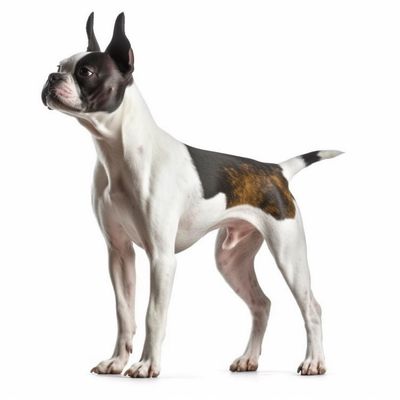
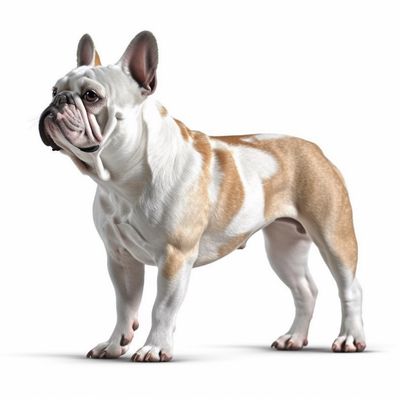
The short answer
The Boston Terrier is more active and better with kids; the Frenchie needs less exercise.
Choose the Boston Terrier if you want:
- A more active dog for daily walks and play
- A better fit for a home with young kids
- A dog that copes better with hot summers
- A slightly longer life on average (11–13 years vs 10–12 years)
Choose the Frenchie if you want:
- A dog that’s happy with less exercise
What they share: Both shed little and rarely bark.
Boston Terrier vs French Bulldog at a glance
Highlighted rows are where they differ.
| Trait | Boston Terrier | French Bulldog |
|---|---|---|
| Weight | 12–25 lb (5–11 kg) | 16–28 lb (7–13 kg) |
| Height | 15–17 in (38–43 cm) | 11–12 in (28–30 cm) |
| Life span | 11–13 years | 10–12 years |
| Energy | Medium | Low |
| Exercise needs | Medium | Low |
| Trainability | Moderate | Moderate |
| Intelligence | Medium | Medium |
| With kids | Great | Good |
| With other pets | Good | Good |
| Shedding | Low | Low |
| Grooming | Low | Low |
| Barking | Low | Low |
| In hot weather | Good | Poor |
| In cold weather | OK | OK |
| Adaptability | High | High |
What the table doesn’t show
From across the park they look alike, and they share a lot: small, short-coated, funny and happiest close to you. The real difference is the body. The Frenchie is heavier and more compact, with a flatter face, so heat and hard play affect it more. The Boston is lighter and longer-legged, and it usually keeps up on a long walk. Both have short noses, so choose a breeder who selects for open nostrils and easy breathing.
How to tell a Boston Terrier from a Frenchie
- Ears: the Frenchie has wide, rounded “bat” ears; the Boston’s ears are narrower and pointed.
- Color: a Boston always wears a tuxedo: black, brindle or seal with a white muzzle band, blaze and chest. Frenchies are often fawn, cream or brindle.
- Build: the Boston is square and leggy; the Frenchie is low, wide and heavy-boned.
- Face: the Frenchie’s face is flatter, with a soft roll of skin over its very short nose.
Boston Terrier and French Bulldog in real life
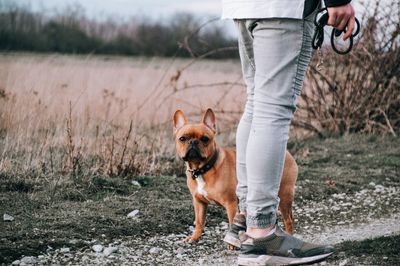
Studio photos make every dog look tidy. Here’s what each one looks like out in the world.

Which is bigger, the Boston Terrier or the Frenchie?
The Frenchie is heavier; the Boston Terrier is taller. A Frenchie weighs 16–28 lb (7–13 kg) and stands 11–12 in (28–30 cm) at the shoulder. A Boston Terrier weighs 12–25 lb (5–11 kg) and stands 15–17 in (38–43 cm).
Which needs more exercise, the Boston Terrier or the Frenchie?
The Boston Terrier. The Boston Terrier is moderately active and needs a daily walk plus playtime. The Frenchie is laid-back and happy with short daily walks.
Which is better with kids, the Boston Terrier or the Frenchie?
The Boston Terrier. The Boston Terrier is great with kids; the Frenchie is good with kids. Both usually get along with other pets. Whichever you choose, supervise young children with any dog.
Which is easier to train, the Boston Terrier or the Frenchie?
They’re about the same. Both train well with patience and consistency and learn at a steady pace.
Which sheds more, the Boston Terrier or the Frenchie?
About the same: both shed little. Both need little grooming.
Which barks more, the Boston Terrier or the Frenchie?
Neither: both rarely bark. Expect a quiet dog either way.
Which lives longer, the Boston Terrier or the Frenchie?
The Boston Terrier, on average. The Boston Terrier usually lives 11–13 years; the Frenchie usually lives 10–12 years. Within any breed, good breeding, a healthy weight and regular vet care make a real difference.
Which handles hot and cold weather better, the Boston Terrier or the Frenchie?
The Boston Terrier handles heat better. The Boston Terrier handles heat well and copes with mild cold. The Frenchie struggles in the heat and copes with mild cold. On hot days, keep walks short and keep the Frenchie cool.
Still deciding? Compare similar breeds
Breeds like the Boston Terrier
Read the full Boston Terrier profile →Full trait profiles
Every trait we rate, with notes on each breed.
Boston Terrier
Boston Terriers are small and compact, standing 15-17 inches tall and weighing 12-25 lbs.
Boston Terriers have moderate energy levels and enjoy daily walks, playtime, and interactive toys to stay engaged.
Boston Terriers require regular exercise, such as walks and playtime, to keep them mentally and physically fit.
Boston Terriers are intelligent and eager to please, making them moderately easy to train with consistency and positive reinforcement.
Boston Terriers are intelligent dogs, known for their problem-solving skills and quick learning abilities.
Boston Terriers are highly adaptable and can thrive in various living situations, including apartments and homes with yards.
Boston Terriers are gentle, patient, and loving, making them wonderful companions for children.
Boston Terriers usually get along well with other dogs and pets, especially if socialized from an early age.
Boston Terriers can manage in cold climates, but they require proper shelter and protection due to their short coats.
Boston Terriers can handle hot climates but require shade, water, and limited exercise during the hottest parts of the day.
Boston Terriers have short, smooth coats that shed minimally. Regular grooming can help keep shedding under control.
Boston Terriers require minimal grooming, with occasional brushing and bathing to keep their coats clean and healthy.
Boston Terriers bark occasionally, usually only when necessary or provoked.
Boston Terriers may experience some health issues and require additional care and attention, such as regular veterinary checkups, preventative care, and potential medication or treatments.
French Bulldog
French Bulldogs are small-sized dogs, weighing 16-28 lbs, with a height of 11-12 inches.
French Bulldogs are known for their low energy levels and enjoy a more relaxed lifestyle.
French Bulldogs require minimal exercise, with short daily walks and indoor playtime being sufficient.
French Bulldogs are moderately easy to train, but they can be stubborn at times, so patience and consistency are key.
French Bulldogs are of average intelligence and can learn new commands with consistent training.
French Bulldogs are highly adaptable and do well in various living situations, including apartments and houses.
French Bulldogs are generally good with kids, being patient and affectionate with them.
French Bulldogs can get along well with other pets when properly socialized.
French Bulldogs can tolerate some cold weather but should be protected from extreme cold with appropriate clothing and shelter.
French Bulldogs are not well-suited for hot climates due to their short snouts, making it difficult for them to regulate their body temperature.
French Bulldogs have minimal shedding due to their short, smooth coats.
French Bulldogs require minimal grooming, with occasional brushing to remove loose hair.
French Bulldogs bark occasionally, usually only when necessary or provoked.
French Bulldogs have breed-specific health issues, requiring regular veterinary checkups, preventative care, and potential treatments.